
Planning a dream vacation and considering using Airbnb? Be aware of the potential for Airbnb scams. While Airbnb offers incredible travel experiences, it’s crucial to be vigilant and informed to protect yourself from fraudulent listings and other deceptive practices. This article provides essential tips and strategies to help you avoid Airbnb scams, ensuring a safe and enjoyable trip. Learn how to identify red flags, verify listings, and secure your booking, allowing you to focus on exploring your destination worry-free. From understanding Airbnb security measures to recognizing common rental scams, we’ll empower you to navigate the platform safely and confidently.
Airbnb scams can range from fake listings and phishing attempts to bait-and-switch tactics and inflated prices. Don’t let these risks deter you from experiencing the benefits of Airbnb. By taking a few precautionary steps and understanding the potential pitfalls, you can significantly reduce your risk of encountering Airbnb scams while traveling. This guide will equip you with the knowledge and tools necessary to identify and avoid scams on Airbnb, ensuring a smooth and secure booking process. Learn how to thoroughly research hosts, scrutinize listing details, communicate effectively, and utilize Airbnb’s safety features to your advantage. Start your journey with confidence and peace of mind, knowing you’re prepared to avoid vacation rental scams.
How Airbnb Scams Happen
Airbnb scams exploit vulnerabilities in the platform’s trust-based system, targeting both hosts and guests. For hosts, scams often involve fake payment methods or requests for refunds outside of the Airbnb platform. Scammers may pose as legitimate guests, book a reservation, and then claim issues with the property or their payment to manipulate the host into sending money directly. Hosts should be wary of overly enthusiastic communication, requests to bypass Airbnb’s payment system, or stories that seem too good to be true. Always communicate and transact through the Airbnb platform to maintain protection.
Guests can also fall victim to scams, frequently involving fake listings or bait-and-switch tactics. Scammers may create enticing listings with photos of properties they don’t own or control, then request payment outside of the Airbnb platform. Once the payment is received, the scammer disappears, leaving the guest without accommodation. Another common tactic involves switching the guest to a less desirable property after booking. Guests should thoroughly research listings, looking for verified reviews and hosts, and avoid listings with prices significantly lower than comparable properties. Like hosts, guests should also only communicate and pay through the Airbnb platform.
Protecting yourself against Airbnb scams requires vigilance and adherence to safe practices. Verify host and guest profiles, looking for verified badges and reviews. Be suspicious of unusual requests or communication. Never transfer money outside of the Airbnb platform, as this forfeits buyer and seller protections. By understanding common scam tactics and following safety guidelines, both hosts and guests can minimize their risk and enjoy a positive Airbnb experience.
Fake Listings and Third-Party Bookings
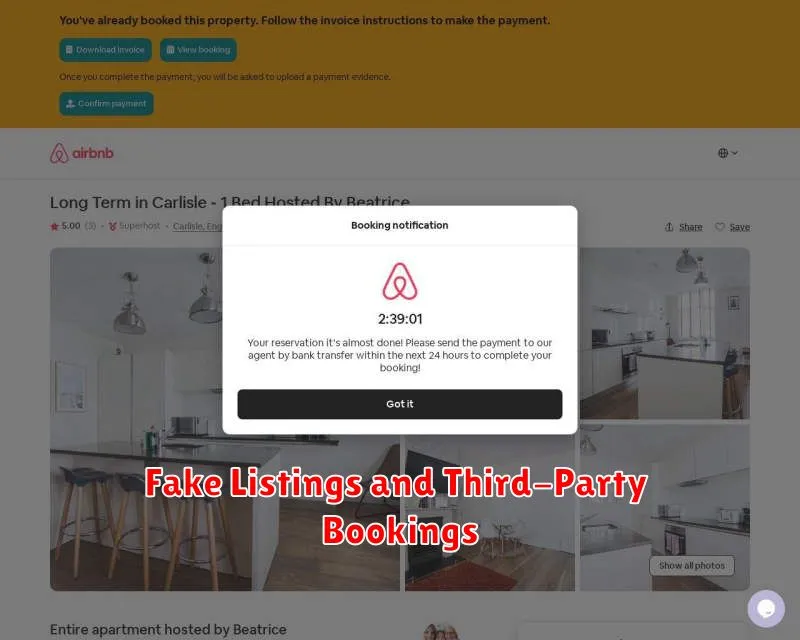
Fake listings are fraudulent advertisements for accommodations that don’t exist or are misrepresented. These listings can appear on various platforms, including social media and less reputable booking websites. They often lure travelers with attractive photos and low prices. It is crucial to book through trusted platforms and be wary of deals that seem too good to be true. Verify the legitimacy of a listing by cross-referencing information, looking for reviews, and contacting the host directly through official channels whenever possible.
Third-party bookings refer to reservations made through platforms other than the official property or management company. While many legitimate third-party booking sites exist, they can also be a source of fake listings. Using a reputable third-party booking site can offer benefits like price comparison and bundled travel deals. However, it’s important to understand the terms and conditions, including cancellation policies and any additional fees. Be sure the site offers secure payment methods and customer support in case of issues.
To protect yourself from scams, always research thoroughly before booking any accommodation. Look for verified reviews and ratings from previous guests. Be suspicious of listings with limited or no reviews, especially if the property claims to be newly listed. If you encounter a suspected fake listing, report it to the platform immediately. This helps protect other travelers from falling victim to the same scam.
Red Flags in Reviews and Listings
When evaluating reviews and listings, pay close attention to potential red flags that may indicate misleading or unreliable information. Excessively positive reviews with similar wording or phrasing can be a sign of fabricated reviews. Likewise, a sudden influx of positive reviews after a period of negative ones might indicate an attempt to bury legitimate complaints. Generic reviews lacking specific details about the product or service should also raise suspicion. Finally, be wary of reviews that focus heavily on superficial aspects rather than substantial qualities, as this may be an attempt to distract from more significant flaws.
Within listings themselves, several red flags warrant caution. Vague or overly enthusiastic language, lacking concrete details about features or specifications, can be misleading. Unrealistic pricing significantly below market value should raise immediate concerns, potentially indicating a scam or counterfeit product. Be wary of listings with poor quality images or a lack of images altogether, as this can suggest an attempt to conceal defects or misrepresent the product. Additionally, inconsistent information across different sections of the listing, such as conflicting descriptions or specifications, should be considered a red flag.
If you encounter any of these red flags, proceed with extreme caution. Further research and verification are recommended before making any purchasing decisions. Consider consulting independent sources of information, such as consumer protection agencies or reputable review websites, to gain a more balanced perspective.
How to Verify a Legitimate Host
Verifying a legitimate host requires careful scrutiny and a multi-pronged approach. Begin by researching the host’s online presence. Look for established websites, social media activity, and reviews from multiple sources. Pay particular attention to the age of the domain and any mentions of the host on reputable travel or hospitality platforms. Transparency is key; a legitimate host will readily provide clear contact information, including a physical address, phone number, and email address. Avoid hosts who solely communicate through messaging apps or display vague contact details.
Secure payment methods are another crucial indicator of legitimacy. Never transfer money directly to a host’s bank account or through untraceable methods. Reputable platforms offer secure payment gateways that protect both the host and the guest. Look for platforms that offer booking guarantees and dispute resolution services. Furthermore, scrutinize the host’s listing for detailed descriptions and high-quality photos. Verify the accuracy of the information provided, including the property address and amenities, through independent sources like online maps and property records.
Finally, communication is paramount. Engage with the host directly, asking pertinent questions about the property and surrounding area. A legitimate host will respond promptly and professionally, providing thorough answers and addressing any concerns you may have. Be wary of hosts who are evasive, pushy, or offer deals that seem too good to be true. Taking these steps will significantly increase your chances of booking with a legitimate host and enjoying a safe and enjoyable travel experience.
Booking Directly Through the App
Booking your trips directly through our app offers several key advantages. You’ll gain access to exclusive deals and promotions only available to app users, often resulting in significant savings. Managing your bookings is also streamlined within the app. You can easily view upcoming trips, modify reservations, and access important travel documents all in one place.
Beyond booking and managing trips, the app provides real-time travel updates, including gate changes, flight delays, and baggage claim information. This helps you stay informed and adjust your plans as needed, reducing potential travel stress. The app also offers convenient features like mobile check-in and digital boarding passes, further simplifying your travel experience.
By booking through the app, you’ll have access to 24/7 customer support directly through the app’s chat feature. This allows for quick and easy assistance with any questions or concerns you may have before, during, or after your trip.
What to Do If You Suspect a Scam
If you think you’ve encountered a scam, it’s crucial to act quickly. First, stop all communication with the suspected scammer. Do not reply to emails, answer calls, or click any links they’ve sent. Then, gather any evidence you have of the interaction, such as emails, text messages, or transaction records. This information will be valuable if you decide to report the scam.
Next, report the scam to the appropriate authorities. This could include your local police department, the Federal Trade Commission (FTC), or the Internet Crime Complaint Center (IC3), depending on the nature of the scam. If the scam involved a specific company or platform, report it to them as well. For example, if you encountered a fraudulent seller on an online marketplace, report the incident to the marketplace’s customer service department.
Finally, take steps to protect yourself from future scams. Be wary of unsolicited offers that seem too good to be true. Never share personal or financial information with someone you don’t know and trust. Regularly monitor your bank accounts and credit reports for any suspicious activity. By taking these precautions, you can reduce your risk of becoming a victim of a scam.
Airbnb’s Resolution Center and Refund Policy
Airbnb’s Resolution Center is a platform designed to help guests and hosts resolve issues related to their bookings. If a problem arises, such as a needed change to the reservation or a dispute about the property’s condition, the Resolution Center provides a structured process for communication and finding a solution. It’s important to contact your host first to try and resolve the issue directly. If you can’t reach a resolution together, you can officially open a case in the Resolution Center. Airbnb will then step in to mediate and help find a fair resolution.
Airbnb’s refund policy is closely tied to the host’s cancellation policy, which you can find on the listing page before booking. There are several different cancellation policies, ranging from flexible to strict, each outlining different refund amounts depending on when you cancel. In certain circumstances, guests may also be eligible for a full refund outside of the host’s cancellation policy, such as if the listing is significantly misrepresented, or if there are safety or health issues with the property. It’s crucial to carefully review the host’s cancellation policy before booking and to document any issues with the property with photos and videos if you encounter problems during your stay.
To access the Resolution Center, navigate to your Trips in your Airbnb account, select the relevant trip, and click on “Contact Host.” If you’re unable to resolve the issue with your host, you’ll find the option to escalate the issue to Airbnb within the message thread. Remember to communicate clearly and provide supporting evidence when using the Resolution Center to ensure a smooth and efficient resolution process.
