
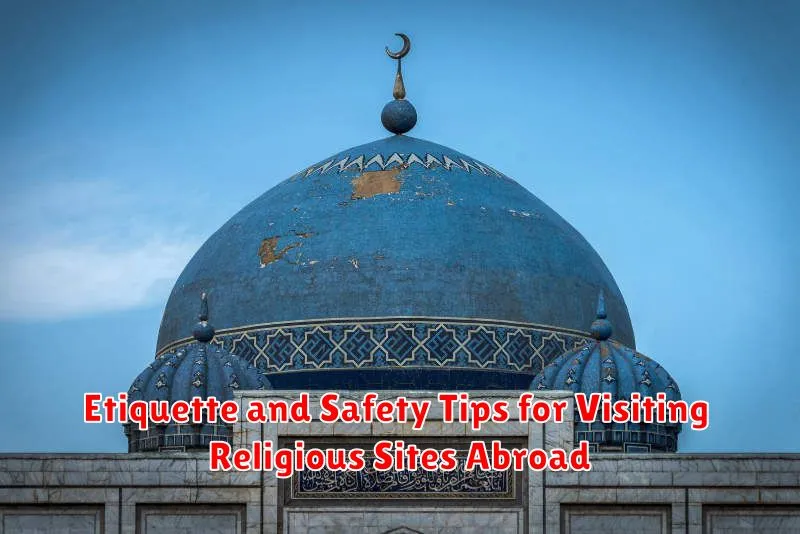
Traveling to experience different cultures and religious sites abroad can be an enriching experience. Understanding the proper etiquette and safety tips for visiting these sacred places demonstrates respect for local customs and ensures a positive experience for both visitors and the community. This guide provides essential information for navigating religious sites abroad with cultural sensitivity and awareness, encompassing a range of faiths and traditions. From appropriate dress codes and photography guidelines to safety precautions and respectful interactions, these etiquette tips will help you approach these spaces with reverence and consideration.
Whether you are planning a pilgrimage, a cultural tour, or simply exploring a new destination, being mindful of local customs is paramount. This article addresses crucial aspects of etiquette, including proper attire, respectful behavior within sacred spaces, and navigating photography guidelines. We also cover safety tips, such as protecting your belongings, staying aware of your surroundings, and respecting local laws and regulations. By following these guidelines, you contribute to a harmonious and respectful environment when visiting religious sites abroad, ensuring a meaningful and safe experience.
Why Respecting Religious Spaces Is Essential
Respecting religious spaces is paramount for fostering peaceful coexistence and interfaith harmony. These spaces hold deep spiritual significance for individuals and communities, serving as places of worship, reflection, and connection with the divine. Disrespecting such spaces can cause significant offense and undermine the very foundations of religious freedom. It is crucial to recognize the diversity of beliefs and practices and to treat all religious spaces with the reverence they deserve. This includes adhering to specific customs or guidelines, such as dress codes or photography restrictions, that may be in place.
Beyond their spiritual importance, religious spaces often play a vital role in the broader social fabric of a community. They can serve as centers for social gatherings, charitable work, and education. By respecting these spaces, we demonstrate respect not only for the religious beliefs themselves but also for the individuals and communities who utilize them. This fosters a sense of mutual understanding and respect, contributing to a more inclusive and harmonious society.
Respect for religious spaces is a fundamental aspect of human rights. It upholds the principles of freedom of religion and belief, which are essential for a just and equitable world. By respecting the sanctity of these spaces, we contribute to a society where all individuals feel safe and valued in practicing their faith. This respect ultimately strengthens our collective humanity and promotes a world where diversity is celebrated and protected.
Understanding Dress Codes

Dress codes provide guidelines for appropriate attire in specific settings. They aim to create a cohesive and respectful environment by setting expectations for how individuals present themselves. Understanding and adhering to dress codes demonstrates professionalism and respect for the occasion and those around you. Dress code enforcement varies depending on the context, ranging from gentle reminders to more serious consequences.
Dress codes often fall into several categories, including formal (e.g., black tie, white tie), semi-formal (e.g., cocktail attire), business professional (suits, dresses), business casual (slacks, button-down shirts, blouses), and casual (jeans, t-shirts). Each category signifies a different level of formality, and the specific requirements can vary within each category depending on factors like the industry, company culture, or event type. Paying attention to the details of a given dress code ensures you are appropriately attired.
When in doubt about a dress code, it’s always best to err on the side of being overdressed rather than underdressed. If the dress code is unclear, asking for clarification from the host, organizer, or human resources department is a sensible approach. Being prepared and dressing appropriately demonstrates respect and consideration for the environment and occasion.
When to Remove Shoes and Headwear
Removing shoes and headwear is a sign of respect and consideration in many cultures and situations. Generally, you should remove your shoes when entering someone’s home, unless specifically told otherwise. This helps keep the home clean and demonstrates respect for the homeowner. Additionally, certain religious spaces, such as mosques, temples, and some churches, require the removal of shoes as a sign of reverence. Pay attention to signage or follow the lead of others present.
Headwear, including hats, caps, and beanies, should typically be removed indoors, especially in formal settings like places of worship, schools, and during ceremonies. This tradition demonstrates respect for the occasion and the people present. However, headwear worn for religious reasons, such as hijabs, kippahs, or turbans, are generally acceptable and should not be removed. Also, hats worn for medical reasons are also perfectly acceptable in any setting.
In summary, being mindful of these customs demonstrates politeness and cultural sensitivity. When in doubt, it’s always best to err on the side of caution and remove your shoes and headwear or simply ask the host or someone in authority what the appropriate etiquette is.
Behavior Expectations Inside Temples or Churches
Maintaining a respectful atmosphere within sacred spaces is crucial. Silence or speaking in hushed tones is generally expected, minimizing disruptions to prayer and contemplation. Reverence for the traditions and beliefs associated with the space should be demonstrated through appropriate attire and demeanor. Avoid loud conversations, laughter, or any behavior that could be considered disrespectful to the sanctity of the environment.
Dress modestly when visiting a temple or church. While specific dress codes may vary, it’s generally advisable to avoid clothing that is revealing, overly casual, or displays potentially offensive graphics or slogans. Consider covering shoulders and knees as a sign of respect. Additionally, electronic devices should be silenced or turned off to minimize distractions. Refrain from taking photographs or videos, especially during services, unless explicitly permitted.
Observe any specific customs or rituals associated with the particular temple or church you are visiting. Pay attention to signage or follow the lead of those around you. If unsure about appropriate behavior, it is always best to err on the side of caution and maintain a respectful demeanor. Respect for the space and those who use it for worship is paramount.
Photography Rules You Should Know

While creativity thrives on breaking boundaries, understanding fundamental photography rules provides a strong foundation for artistic exploration. Composition plays a vital role, guiding the viewer’s eye through the image. The rule of thirds, where key elements are placed along intersecting lines dividing the frame into nine sections, creates balanced and engaging visuals. Leading lines, natural frames, and symmetry can also enhance composition. Mastering these basic compositional techniques allows you to create more impactful and visually appealing photographs.
Lighting is another crucial aspect. Understanding how light interacts with your subject is essential for creating the desired mood and highlighting details. The golden hour, the period shortly after sunrise or before sunset, offers soft, warm light ideal for portraits and landscapes. Pay attention to the direction and quality of light – front lighting illuminates the subject evenly, side lighting creates shadows and depth, and backlighting can produce dramatic silhouettes. Experimenting with different lighting scenarios can dramatically transform your images.
Finally, remember the importance of focus and depth of field. A sharp focus on your subject draws attention to the intended point of interest. Depth of field, controlled by aperture, determines how much of the scene is in focus. A wide aperture (small f-number) creates a shallow depth of field, blurring the background and isolating the subject, while a narrow aperture (large f-number) keeps both foreground and background in focus. Choosing the appropriate depth of field helps you control the story your image tells.
Safety Considerations for Tourists
Staying safe while traveling requires awareness and planning. Research your destination thoroughly before you go, paying attention to local laws, customs, and any potential safety concerns. Secure your valuables by using hotel safes and keeping important documents close. Be mindful of your surroundings, especially in crowded areas, and avoid displaying large amounts of cash. Trust your instincts – if a situation feels unsafe, remove yourself from it.
Communication is key in emergencies. Ensure you have a working phone and consider purchasing a local SIM card for easy access to communication networks. Share your itinerary with someone at home and check in regularly. Familiarize yourself with local emergency numbers and the location of your country’s embassy or consulate. Carry a physical copy of important contact information in case of phone loss or battery failure.
Protecting your health is also crucial. Consult your doctor about recommended vaccinations and necessary precautions for your destination. Pack a basic first-aid kit and any necessary medications. Be cautious about consuming food and water, opting for bottled water and reputable establishments. Pay attention to your body and seek medical attention if needed. Travel insurance is highly recommended to cover unexpected medical expenses or travel disruptions.
Gifts and Donations: What’s Appropriate?
Navigating the world of gifts and donations can be tricky. Understanding the difference between a gift and a donation is key. A gift is typically given to an individual and is often personal, while a donation is usually given to an organization or cause and is often charitable. The appropriateness of both depends heavily on context, including your relationship with the recipient and the specific circumstances.
For gifts, consider the recipient’s preferences and the occasion. An extravagant gift might be appropriate for a close family member’s milestone birthday, but not for a coworker. Similarly, a donation to a recipient’s favorite charity might be a thoughtful gesture in lieu of a traditional gift. It’s crucial to avoid giving gifts that could be perceived as bribes or create a conflict of interest, particularly in professional settings.
With donations, research the organization to ensure it aligns with your values and operates ethically. Transparency and accountability are important factors to consider. While the amount of a donation is a personal decision, it’s generally recommended to contribute what you can comfortably afford. Remember to check if your donation is tax-deductible and retain any necessary documentation.
